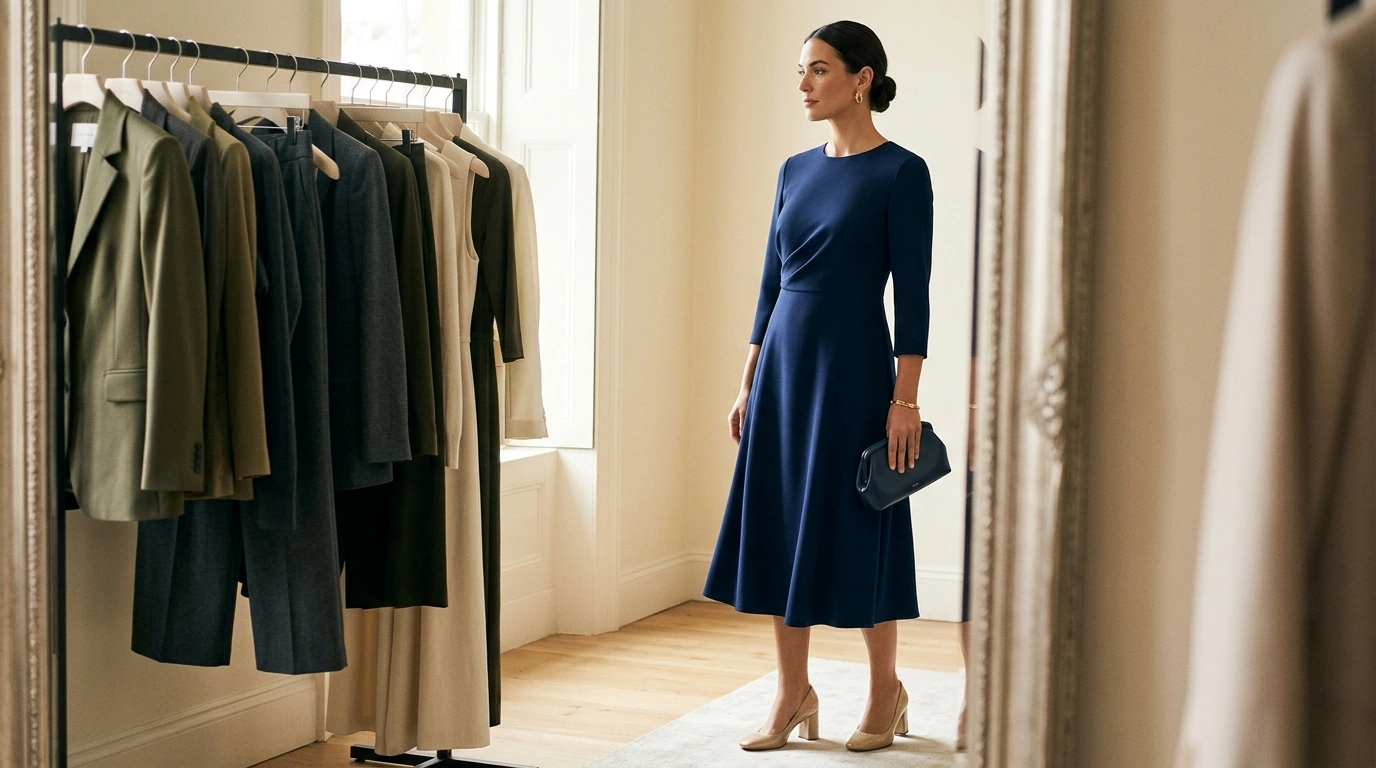
In a dress code, “elegant” signals polished, refined, and intentionally put-together—more elevated than everyday attire, but not necessarily as formal as black tie. The goal is a clean silhouette, quality fabrics, and coordinated accessories that look effortless rather than flashy.
Elegant outfits start with fit. Look for tailored seams, defined waistlines, and hems that sit neatly. A midi dress, sheath dress, wrap dress, tailored jumpsuit, or a suit with a crisp blouse are reliable options.
Neutrals and rich, classic tones—black, navy, cream, camel, deep green, burgundy—read as elegant. Fabrics like satin, silk, crepe, wool blends, and lace details can elevate a look, especially when they drape smoothly and avoid excessive shine.
Think “fewer, better.” A small clutch, simple jewelry, and a belt or scarf used with purpose add refinement. Avoid oversized logos or overly trendy pieces that can compete with the outfit’s clean lines.
Elegant also includes presentation: pressed clothing, clean shoes, neat hair, and subtle makeup (or a simple, fresh face). These details often matter more than adding extra embellishments.
Formal typically implies stricter rules (floor-length gowns, tuxedos, or very dressy cocktail attire). Elegant is a style standard within many dress codes—cocktail, semi-formal, and even smart casual—meaning your outfit should look elevated, cohesive, and high-quality without being overstated.
For more examples and outfit guidance, visit https://daintymajesty.shop/what-does-elegant-mean-for-dress-code/.
For Elegant Dress Code Meaning: A Simple Style Guide, the best answer depends on fit, material, care instructions, and how the product will be used day to day.
Classy leans toward timeless good taste and appropriate choices, while elegant emphasizes refined simplicity, smooth lines, and a polished finish. An outfit can be both, but elegance is often more about sleek restraint.










Leave a comment